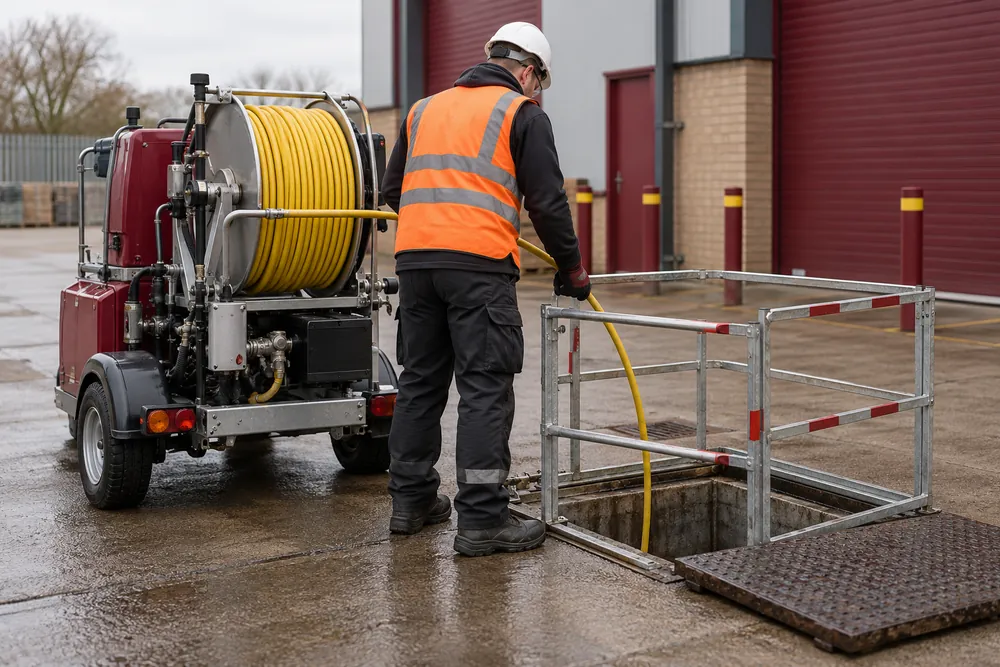
When Jetting Is The Right Cleaning Method
Water jetting can remove soft deposits, accumulated silt and grease from suitable drainage runs. A hose carries a selected nozzle through the line, using water jets to loosen material and move it towards a collection or discharge point. The right approach starts with understanding the drainage layout.
Jetting may be useful after a blockage, before a camera survey or within a planned maintenance programme. For a commercial kitchen, the focus may be grease in the downstream pipework. In a yard, the problem may be silt carried through gullies and channels during normal site use.
Jetting does not correct a collapsed pipe, poor gradient or displaced joint. Fragile or damaged drains may need investigation before cleaning is attempted. If a run repeatedly blocks, the cleaning plan should include a decision about further inspection rather than an assumption that more pressure will solve the problem.
Controlled Water Flow, Suitable Equipment
Nozzle selection, flow and working pressure need to suit the deposit and the pipe. A larger water flow can help move material, while a different nozzle may be needed for a particular obstruction. Equipment should be selected by a competent contractor following a site assessment.
Recovered material must be managed properly. Moving silt out of one chamber and leaving it to settle in the next is not a complete maintenance outcome. Ask whether the scope includes collection, vacuum recovery or disposal where the deposit cannot safely remain in the drainage system.
Access can be as important as the jetting equipment itself. We need to understand where a vehicle can stand, how hoses can reach the work area and whether pedestrian routes must remain open. Share restrictions around loading bays, security barriers and areas used for food handling.
Plan A Safe Working Area
High-pressure water can cause serious injury. HSE points the industry towards Water Jetting Association codes of practice, and the work needs suitable training, maintained equipment and safe operating controls. A hose should not be treated as an ordinary washdown tool.
The site plan should address barriers, hose routes, splash exposure and the protection of other workers. Chamber entry is a separate issue governed by the Confined Spaces Regulations 1997 where applicable. Work from outside the chamber wherever possible, with any unavoidable entry covered by its own arrangements.
A Cleaning Schedule Based On Evidence
Planned jetting should reflect the actual deposits and the consequences of a blockage. Start with the problem runs, the cleaning findings and the way the site operates. A fixed calendar interval without inspection evidence may mean unnecessary visits or leave a heavily used section untreated for too long.
Keep a record of the cleaned runs, recovered material and any access issues. Comparing findings over time helps you adjust the schedule or spot a change in site use. Pair maintenance with good housekeeping, such as keeping food solids, packaging and yard debris out of drainage channels.
What Affects The Cost Of Jetting
The quotation depends on pipe size, length, access and the type and amount of deposit. Tanker support, water supply arrangements and the need to recover waste can change the equipment required. Restricted hours or traffic management may also affect how the work is planned.
Confirm what counts as completion before authorising the visit. Flow checks, photographs and a follow-up camera pass provide different levels of evidence. If the aim is to prepare a drain for lining, the repair contractor should set the cleaning standard required for the chosen system.
From Enquiry To Handover
- Share The Site Details. Include the postcode, the symptoms and any previous reports. Identify a person who can explain site access and authorise the agreed work.
- Agree The Method And Scope. Confirm the affected runs, equipment, safety arrangements and working window. Clarify what is included and how any change will be priced before it is carried out.
- Review The Outcome. Ask for the agreed completion record and discuss any limitations. Keep the findings with your maintenance records and approve any further investigation as a separate decision.
Drain Jetting FAQs
Can Jetting Damage A Drain?
Drain jetting can damage unsuitable or defective pipework if equipment and settings are not appropriate. The contractor should assess the line, select the method and stop if findings suggest a structural problem. Tell us about known defects, previous repairs and any survey footage so the cleaning approach can be considered before work starts.
Is Drain Jetting The Same As Unblocking?
Drain jetting is a cleaning method that can be used during unblocking, but the two scopes are not identical. Unblocking focuses on restoring flow at a restriction. A planned jetting visit may clean a longer run and remove deposits even where water is still passing, with inspection or waste recovery agreed separately.
How Often Should Commercial Drains Be Jetted?
Commercial drain jetting frequency should follow the site history, the build-up found and the impact of drainage failure. Kitchens and yards can have very different maintenance needs. Begin with a recorded inspection or cleaning visit, review what was removed and agree a schedule that can change as evidence develops.
Guidance Behind This Page
Read Approved Document H, HSE confined spaces guidance and GOV.UK business waste responsibilities. These references explain relevant duties and guidance, rather than a claim of accreditation.