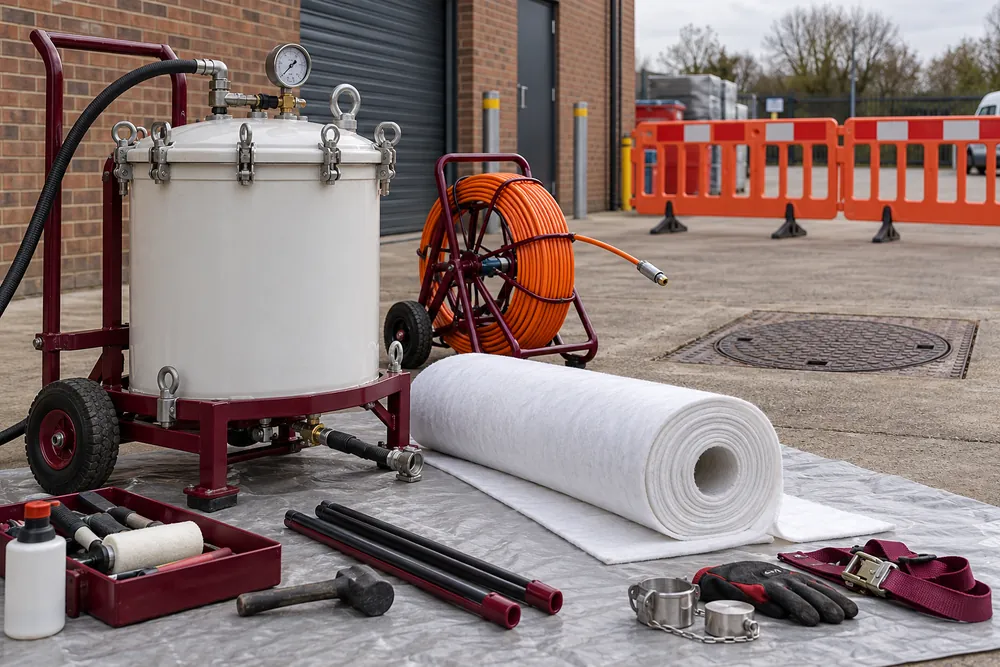
Where A Liner Can Be Useful
Drain lining introduces a new internal layer within an existing pipe. A local patch treats a defined area, while a longer liner can cover a run with several defects. These methods can reduce excavation where the original pipe and the access arrangement are suitable.
Cracks, some joint defects and local root entry points may be candidates after assessment. A liner is not a universal answer to every drainage problem. It cannot reset the fall of a badly sagging pipe, and a collapse or serious displacement may leave no practical route for installation.
For a business, avoiding an excavation can preserve access to a yard or reduce disruption inside a building. Drainage still needs an agreed period out of service. Preparation, installation and curing must be planned around the connected fixtures rather than described as work with no operational effect.
Survey And Preparation Come First
The inspection should identify pipe diameter, material, defect positions and connections along the proposed repair. Standing water or heavy deposits can limit the findings. Ask which runs have been seen, what remains uncertain and whether additional cleaning or investigation is required before a design can be finalised.
The pipe needs preparation appropriate to the selected lining system. This can involve deposit removal, root cutting and checking the cleaned surface with a camera. Preparation should not be treated as a minor extra when it determines whether the repair can be installed as intended.
Connections need careful attention. A liner must not leave active branches blocked, and some connections may need reopening after installation. The proposal should identify relevant junctions and explain how their continued use will be checked, rather than assuming the line serves a single outlet.
Choose A Repair System For The Conditions
Cured-in-place methods use a resin-impregnated material that hardens inside the original pipe. Installation and curing arrangements vary between systems. Ask the contractor to explain the selected method, suitability for the pipe contents and any temperature or chemical exposure relevant to your premises.
Where a structural repair is required, the design needs to consider the actual loads and pipe condition. A lining product name alone does not establish that the repair is appropriate. Agree what design information and installation records will form the handover, particularly for a commercial asset managed by a consultant.
Standards, Access And Site Controls
Approved Document H provides drainage guidance for England, but it is not a product approval for a specific liner. Building control or water company requirements depend on ownership and the scope of work. Confirm those requirements before commissioning a repair that affects an adopted sewer or a proposed building connection.
Site controls must cover open chambers, wastewater isolation and the materials used for the repair. HSE guidance makes avoidance of confined space entry the starting point. Where resins or curing equipment are involved, the contractor should explain the product-specific handling and exposure controls in the work plan.
Costs And Evidence At Completion
The price depends on repair length, diameter, access and preparation. Junctions, bends, active flows and curing arrangements can change the scope. A short patch is not directly comparable with a designed full-length liner, so compare quotations against the same defect schedule and completion requirements.
Ask for the agreed repair location, installation record and post-work camera footage. Completion checks should include the relevant connections and any limitations that remain. Keep the records for future drainage work, and request the terms of any product or workmanship warranty in writing without assuming a standard lifespan.
From Enquiry To Handover
- Share The Site Details. Include the postcode, the symptoms and any previous reports. Identify a person who can explain site access and authorise the agreed work.
- Agree The Method And Scope. Confirm the affected runs, equipment, safety arrangements and working window. Clarify what is included and how any change will be priced before it is carried out.
- Review The Outcome. Ask for the agreed completion record and discuss any limitations. Keep the findings with your maintenance records and approve any further investigation as a separate decision.
Drain Lining FAQs
Can Drain Lining Correct A Poor Gradient?
Drain lining follows the existing pipe and does not generally correct a poor gradient or remove a substantial sag. If standing water relates to alignment, excavation and replacement may be the better option. Ask for the survey findings and the proposed result to be explained before treating lining as a suitable repair.
Can The Building Use Its Drains During Lining?
Drain use during lining depends on the repair method, connected outlets and the isolation plan. Affected flows normally need to be kept away while the liner is installed and cured. Agree downtime, any bypass arrangements and the point at which fixtures can return to service before the work is booked.
Is A Patch Repair Different From Full Drain Lining?
A drain patch repair treats a local section, while full drain lining covers a longer agreed run. Selection depends on the defect pattern, pipe condition and access. The quotation should identify the repair extent and explain why that approach is suitable, including how branches and the ends of the repair will be checked.
Guidance Behind This Page
Read Approved Document H, HSE confined spaces guidance and GOV.UK business waste responsibilities. These references explain relevant duties and guidance, rather than a claim of accreditation.